88% of real estate investors say they are piloting AI in some form. Only 5% report having hit the goals they set for it. That gap is not a story about the technology being early. It is a story about the wrong tool being pointed at the wrong problem.
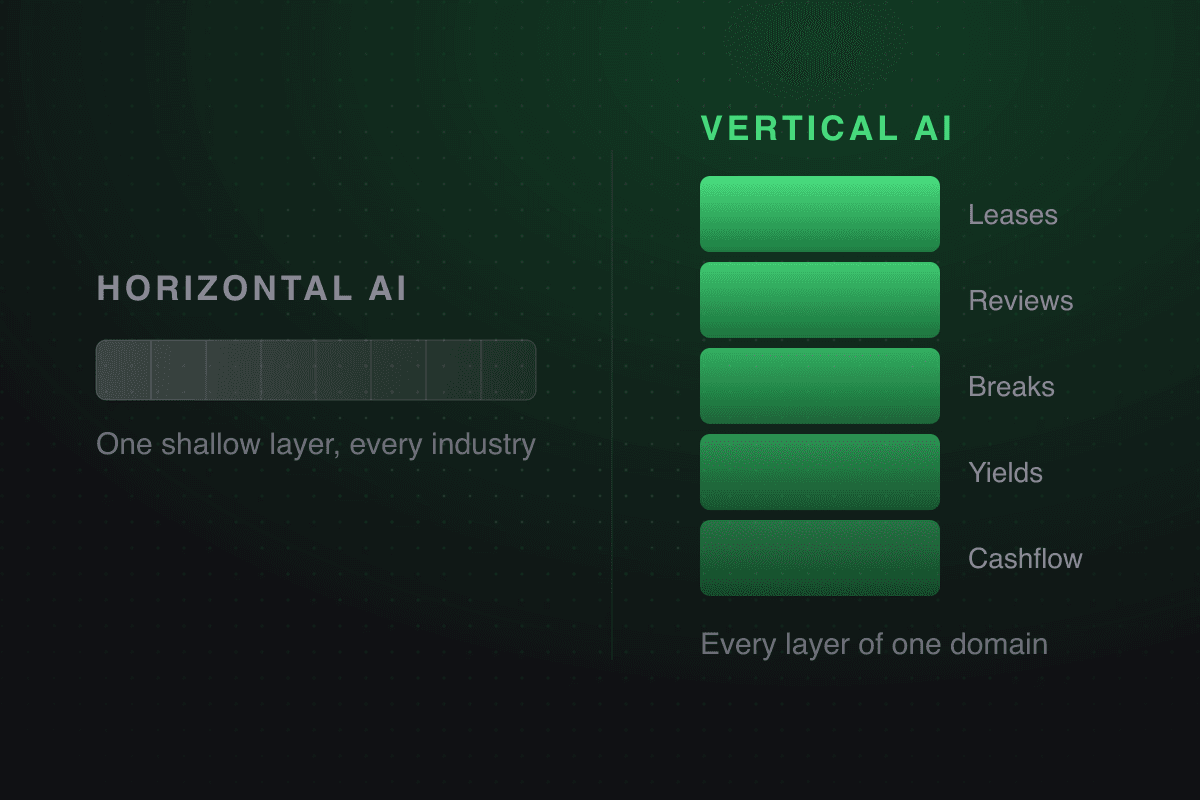
Generic copilots are trained to sound plausible across every subject at once. Underwriting is the opposite discipline. A single misread rent review, a break clause treated as an expiry, a service charge booked as income, and the number at the bottom is wrong in a way no amount of fluent prose can rescue.
Vertical AI is built the other way round. It knows what a tenancy schedule is before it reads one. It knows that a five year lease with a tenant-only break at year three is not a five year income. It knows which assumptions an analyst is allowed to make and which ones must be surfaced for a human to sign off.
The firms getting real value are not the ones with the biggest models. They are the ones whose AI understands their domain deeply enough that every figure it produces can be traced, checked and defended. That is the whole argument for going vertical.